Friday, August 16, 2019

【LED Light Bar】9D Single Row Spotlight Auto LED Light Bar

In the world of off-road vehicles, you are free to explore the wilderness, from the sparsely populated Gobi desert to the rugged mountain roads. In heavy rain and sunny days, at this moment, high-quality light bars undoubtedly make your adventure more perfect. Therefore, it is very important to equip your off-road vehicles with a lighting system that can meet the pace of exploration.

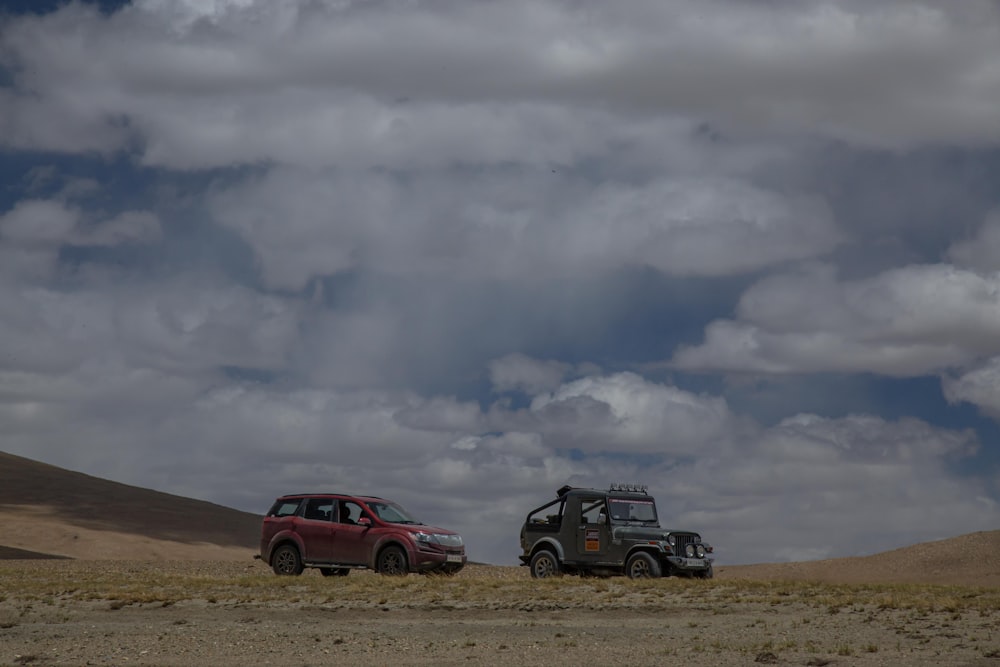
green utility vehicle on brown soil


Today, what we recommend for you is VLED’s VL21 CE EMC 9D Single Row Spotlight Auto LED Light Bar for offroad truck.


Perhaps you will ask what is 9D? what function will 9D give?
9D LED light bar is a lastest upgrade in the field of LED light bar, with the 9D lens which made by PMMA material, it has high transparency and great endurance against UV, brighter, more gathering, longer range than ordinary reflector LED light bars.


CE EMC 9D Single Row Spotlight Projector Lens Car Auto LED Light Bar Lightbar for Offroad Truck

Advantages of our 9D LED Light Bars:
1. Newly 9D optic lens gives out a unique fog light beam, more save for drive.
2. Both sliding bottom mounts and sides brackets to meet more installation needs.
3. DT Connector Wire Harness output, more convenient to switch ON/OFF.
4. Die-cast aluminum casing, better shock-proof.
5. Waterproof and anti-corrosion: it can work in raining and harsh environments.
6. Safer, environmental protection and durability, save energy
7. Long life: more advanced than ordinary LED light bulbs, more than 50000 hours lifespan.
8. Much longer valid irradiation distance than normal bulbs.
9. Suitable for and easy mounting to different vehicles, solve the problem that simple vehicle without fog light.
10. These products can be used in combination, it is convenient for someone who wants super bright lighting.


CE EMC 9D Single Row Spotlight Projector Lens Car Auto LED Light Bar Lightbar for Offroad Truck

For you who like adventure, how important it is to choose a good LED light bar for your off-road truck. It should not be ignored by us, so let’s do it.


red SUV on brown hill

VANTEN LED (www.vanten.co.uk)offers LED headlights, work lights, and light bars. If you have any questions about LED lights, please feel free to ask us. We will provide the most professional answers and considerate services.

Sunday, August 11, 2019

Intuitive Example of Heat Dissipation and Material Thickness of LED Working Light

Like all electronic devices, LED performance is greatly affected by ambient temperature. Long-term operation of LED lights without reasonable heat dissipation design will lead to overheating of LED packages, which will further reduce the service life until they are completely scrapped.

Energy transformation

The principle of all light sources is to convert electric energy into visible light and heat energy, and the difference is the specific proportion.

The output of incandescent bulbs is mainly concentrated in infrared radiation, visible light only accounts for 8%. Fluorescent light sources have a higher luminous efficiency of 21%, but still emit a large number of infrared rays, ultraviolet rays, and heat.

The infrared ray generated by LED is very small, which can convert 40% of electric energy into visible light, and the rest of the energy is converted into heat, which needs to be conducted out of the LED working area, sequentially passed through the basic printed circuit board, the heat dissipation system and the housing, and finally emitted into the air.

About 60% of the energy in the LED chip is converted into heat, which needs to be dissipated by conduction and convection. If there is no efficient heat management and cooling system, the LED chip will overheat, resulting in changes in LED characteristics. The short-term effect will result in color drift and light output decrease, and the long-term effect will result in accelerated light attenuation, thus shortening the service life.


LED performance degradation

Too high junction temperature will lead to degradation of LED performance, especially service life, light color quality, and lumen output. If the rated maximum junction temperature is exceeded, the service life of the LED will decrease by 30% to 50% for every 10 degrees of increase in the operating temperature.

The last major parameter affected by the LED thermal management system is lumen output. Increasing the current can improve the lumen output of the LED, but large current will also lead to an increase in calorific value. Therefore, when determining the current value, an optimal balance must be selected between the system performance and the service life.


The light material is deformed.

In fact, we also encounter many such things in our life. For example, when an object encounters too hot a temperature, it will slightly deform, and so will the LED light source.


 At present, there are two kinds of heat dissipation methods for commonly LED lights. One is active heat dissipation, i.e. air cooling, water cooling, microchannel cooling, semiconductor cooling, and other forced cooling methods. 

However, active heat dissipation will increase additional power consumption, which will increase the design difficulty considering the protection level requirements.

The second is the passive heat dissipation, which is also the current mainstream heat dissipation method. It mainly relies on natural convection of air, and the heat generated by the heat source is naturally dissipated into the air through the heat sink. The heat dissipation effect of this method depends on the size of the heat sink and the material and processing of the heat sink.


Material properties

Thermal conductivity is a physical quantity used to measure thermal conductivity efficiency. The thermal conductivity of material reflects the thermal conductivity of the material. Some materials are good conductors of heat compared with other materials. For example, the thermal conductivity of pure copper is 400W/m.K, while the thermal conductivity of air is only 0.025.

Aluminum is a common material for making radiating fins, not only because of its high-cost performance but also because aluminum is easy to process, die-cast and extrude. Another more important characteristic of the heat sink is its geometry, while aluminum profiles are easy to process and form. In addition, aluminum has advantages such as light weight, corrosion resistance, and good stability. All in all, aluminum is an excellent material for making heat sinks.

For example, just like this product, the difference is not big from the front appearance but obvious from the back. 


The most intuitive feeling is that the thickness is different. The thickness of the heat sink determines the strength of its heat dissipation capability.


The thickness of the heat sink of the first product is the only 28.5mm, and the thickness of the second product is 52.3mm, which is twice the difference. 


Obviously, the heat dissipation performance of the first product will be much worse than that of the second product, and its service life will be shorter than that of the second product. 

Therefore, when choosing LED products for oneself, the price is only a factor to consider. In addition, the heat dissipation effect and life span of LED products should also be considered.

VANTEN LED (www.vanten.co.uk)main products are LED Headlight kit, LED Fog Light, LED Interior Bulbs, LED Turn Light, LED Driving Light, LED Work Light, LED Light Bar, etc. We have our own brand VLED, and also provide OEM and ODM services.

If you have any questions about LED lights, please feel free to ask us. We will provide the most professional answers and considerate services for you.


Friday, August 9, 2019

Combo Beam Vs Spot Beam Vs Flood Beam:Which beam pattern is right for you?


What is the difference between combo beam, flood beam, and spot beam, and what is the applicable scene of each beam?


Flood,Spot,Combo

Flood beam and spot beam are two types of light modes, which refer to how light is projected.

For vehicles requiring work lights, it is usually necessary to determine more specific functions: width or depth.

However, sometimes the choice is confusing, and you need to consider which type of beam pattern can best meet your needs in various situations.

Here, we introduce a concept called "beam angle" or "beam mode".


The beam angle or pattern is a measure of the angle formed between the brightest point (center) of the light cone and the points on both sides of the center, where the intensity of the light is 50% of the brightness.

A larger beam angle means a wider spread of light in a region. Similarly, a smaller beam angle means a narrower spread of light.

Spot Beam

The spot beam is used to provide light to specific areas and can penetrate into the night to produce a more compact and focused circular beam (pencil beam) that can see the horizon ahead even at higher speeds.

When the spot beam is used, it will have fine light propagation, which is to realize long-distance visibility. Spotlights are usually used to assist or replace headlights and are used for car brushing, off-road and other occasions requiring long-distance lighting.

More gathering, longer range than ordinary reflector LED light bars (From VLED)


Flood Beam

Flood beam produces a broad light pattern, providing a wider range of light but at a smaller distance.


Many people use flood beam to illuminate large areas such as construction sites.  

The difference of spot beam and flood beam


The flood beam is commonly used as work lights and backup lights to see wider areas at shorter distances.


4inch 24W LED Work Lamps 12 Volt (From VLED)


Combo Beam


The combo beam combines the spot beam and the flood beam into one and is used for wide-range and long-distance illumination.


Combo beam combines the advantages of flood beam and spot beam, this beam mode is very suitable for any forward position of the vehicle.


All in all, there are many changes in beam mode. As for how to choose, it depends on your application scenario and personal needs.

VANTEN LED (www.vanten.co.uk) provides various light type LED lights, offers LED headlights, work lights, and light bars. 

If you have any questions about LED lights, please feel free to ask us. We will provide the most professional answers and considerate services for you.


About Off-road Auxiliary Lights


Halogen lights have low cost, simple structure, but short service life and low luminous efficiency.

Xenon light has high brightness and saves electricity, but its color is cold and visibility is low in rainy and foggy days. The LED light has strong brightness, high luminous efficiency, energy conservation, and environmental protection, but poor heat dissipation ( with the development of LED technology, this problem is slowly being solved). If you are an off-road vehicle driver who travels a lot, you really need to install auxiliary lights on the off-road vehicle to improve safety.


If you drive an off-road vehicle with only the original headlights in the middle of the night, facing deep mountains, sparsely populated deserts, rugged mountain roads, or foggy weather, the lighting system of the original vehicle can't help you much at all. In this case, what kind of LED auxiliary light can we use to improve the lighting capability? Fog light In foggy days, the fog water itself has astigmatism effect, so when the general headlights illuminate the fog water, the reflection is very severe and the road surface cannot be seen clearly at all. Even in extreme cases, the headlights have to be turned off, simply relying on the yellow light of the fog lights.

No fog lights

Because the yellow light of fog light is more easily absorbed by fog than white light, it can provide you with a clearer driving vision. However, it should be noted that due to the low installation position of fog lights, during off-road operation at ordinary times, no more or less will encounter some dust, mud and wading situations, so it is better to check after off-road operation each time, and repair or replace in time if there is any situation.  


Spotlight


CE EMC 9D Single Row Spotlight Projector Lens Car Auto LED Light Bar Lightbar for Offroad Truck

It is the light with the longest range of light. When crossing the country, drivers can use spotlights to illuminate distant objects for exploring, searching and asking for help.
Special driving lights and steering auxiliary lights 


Special driving lights are the kinds of lights that perform their maximum function in a completely dark environment. The irradiation surface of this group of lights alone already covers the irradiation range of near and far light. The steering auxiliary lights must be used together with the original lights. When passing through some winding mountain roads, turn on the light, and there will be a very wide-angle visual space.
It should be noted that the additional auxiliary lights are not better with the larger number and the better power. Depending on the situation, the data provided by the vehicle generator is used to judge how many additional lights can be loaded to avoid the insufficient power supply.

Try to avoid using the same light line as the original vehicle, and install a relay in front of the switch in order to realize weak current control of strong current. 

The above four kinds of auxiliary lights for off-road vehicles should never be used at the same time. It must be used according to the current environment and actual needs.

VANTEN LED (www.vanten.co.uk)offers LED headlights, work lights, and light bars. If you have any questions about LED lights, please feel free to ask us. We will provide the most professional answers and considerate services.

Wednesday, August 7, 2019

Advantages and Uses of LED Work Lights


The LED work light has two light shapes of light gathering and floodlight, which are waterproof, resistant to high and low temperatures and compressive. The appearance of LED work lights can be divided into round, square, rectangular, multilateral and oval. Some LED work lights can be combined randomly, among which the light shapes of strip lights can also be combined randomly, and the power will also change with the combination.


LED work lights are suitable for various lighting applications of automotive electronics, such as truck lights, off-road vehicles lights, mechanical lights, agricultural machinery, engineering lights, excavator lights, forklift lights, snow sweeping lights, armored vehicle lights, etc.


Applicable models: off-road vehicles, engineering vehicles, forklifts, drivers, harvesters, beach cars, trucks, tractors, ships, loaders, special vehicles, etc. The application of LED working lights in automobile systems has the following advantages: High color saturation makes the output light clearer and softer, which is in line with the characteristics of car headlights application. Long service life, durability, and strong shock resistance can exceed 10,000 hours, while the service life of traditional halogen lamps is generally about 300 hours. High efficiency and less additional loss. Compared with the complex heat dissipation system of traditional lamps, it can be seen that the heat loss of LED lamps is much smaller, and the conversion efficiency can reach more than 85%, which is especially suitable for the design concept of future automobiles focusing on energy conservation. The response speed is fast, which is different from the traditional incandescent light. HID lamp needs a longer driving and lighting delay to reflect the vehicle conditions and road conditions in real time, leaving drivers a longer judgment time and reducing vehicle safety accidents. Small size, lightweight, can realize smaller and more delicate lamps and lanterns, save more space for the design of other models. Key Characteristics of LED Work Lights.
1. Reliability and service life
2. Efficiency/lumens per watt
3. Response speed
4. Directionality  

The LED light is a light source with good color, no other light such as infrared ray and ultraviolet ray, with little heat and radiation, which is suitable for automotive interior lighting and backlight application.


VANTEN LED (www.vanten.co.uk)offers LED work lights,headlights, and light bars. If you have any questions about LED work lights, please feel free to ask us. We will provide the most professional answers and considerate services.


Tuesday, August 6, 2019

How to choose high quality LED lights for your cars?

The update of technology has made LED lights gradually become the lights of mainstream cars.


With its novel appearance, long life, shock and vibration resistance, energy-saving and environmental protection, and fast response time LED lights quickly cover the modification of the lamp and the front loading market.

However, the prices of the LED car lights on the market vary, and the quality is also uneven.

Many car owners are still hesitant to upgrade the original car halogen lamp to LED car lights. After all, the improper selection of the car lights will bring a series of unnecessary troubles to the car owners.

Due to the serious homogenization of LED lights on the market, even if the appearance is similar, the quality may be very different.

Consumers buying LED lights must not be just cheap, and it is not reliable to choose LED lights through price.


To choose the right LED headlights, you can start with the following four parts.


1.LED lamp beads

Good LED lights use new lamp beads and lamp bead chips for large-scale light source enterprises.

The materials are excellent, advanced technology, power saving, low power loss, good color rendering, and can be used for about 5 years.


Many miscellaneous LED lights are cheap, use inferior lamp beads, severe powder loss, power loss, power consumption, and even heat. After half a year, the color decay is serious, resulting in light illumination.


2. Thermal material
 
For LED lights, it is important to ensure that the life of the lights is long and not easy to break.

If the heat dissipation is not good, the light will be degraded, and the road surface will not be seen. If it is serious, the lamp will be burnt.


LED light thermal conductive materials are generally aluminum and copper, copper thermal conductivity is better than aluminum, but copper is more expensive than aluminum.

Most of the lights on the market use aluminum heat conduction, and good lights will use copper for heat conduction, which also leads to the more expensive LED lamps using copper.


3. Cooling fan

Some of the cheaper LED lamps use a fan that is not up to standard, with low wind and high noise.

High-quality fans and fan ICs are not cheap, and they can be used in materials and ICs, and consumers can't find them.

All in One Design V10 40W 4000lm Car H4 H13h7 H8 H9 H11 Hight/LED Low Beam Headlight Bulbs


Inferior materials for cheap headlights save a lot of cost in this area. Some LED lights have a lot of noise, which is mainly caused by cutting corners on materials and materials.


4. Power controller

A good power controller can not only meet the control function of the lamp bead but also has a good protection function for the lamp bead, which complements the lamp bead and complements the lamp life.


Some cheap light drivers cause insufficient brightness or cause excessive use of lamp beads.

Insufficient brightness can lead to a weakening of the lamp bead, excessive brightness, resulting in lamp bead charging, and even burning of the lamp bead, resulting in a fire.

Since the cost of a cheap LED headlight drive is only one-third the cost of good light, there are still a lot of cheap LED lights to choose from.

All in all, if you want to provide suitable LED lights for your car, the price is not the first factor.

You should think more about lamp beads, heat dissipation, etc., to buy suitable LED lights, and save money and Time cost is unmatched by cheap LED lights.

VANTEN LED (www.vanten.co.uk)offers LED headlights, work lights, and light bars. If you have any questions about LED lights, please feel free to ask us. We will provide the most professional answers and considerate services.


Monday, August 5, 2019

Understand the heat dissipation method of LED and master the service life of LED lights.

Many people often have questions, is it safe to replace halogen headlights with LED lights? Need to add anything to control the heat?

The answer is very safe, no need.

The principle of illumination of halogen headlights is the same as that of incandescent lights. The tungsten filaments are energized and heated to an incandescent state to emit light.

However, halogen lights are upgraded with incandescent lights, which are halogen elements such as bromine and iodine. The principle is effective to alleviate the loss of tungsten wire at high temperature, which is higher in brightness and longer in life than incandescent lights.

The biggest advantage of halogen headlights is that they are cheap and easy to replace. They are used in low-to-medium models. The color temperature of halogen headlights is warmer, and the penetration in rain, snow, and fog is better.

The disadvantage of halogen headlights is that the brightness is not high and the energy consumption is high.

LED lights can directly convert electricity into light, because of its long life, fast lighting, low energy consumption, etc., often used as daytime running lights and brake lights, have a good effect.

Mostly used in the configuration of high-end models, its performance almost completely exceeds the Xenon headlights.

 The only drawback is the higher cost.

The LED headlights are mainly composed of a high-power LED chip module, a power supply driver, and a thermal management system.

Temperature is a key factor in the stability, performance, and longevity of LED headlamps. Thermal management is a necessary means of maintaining a suitable temperature range and uniformity.

Thermal management is simply to allow the chip to operate within a certain temperature range to maintain optimal use to ensure the performance and life of the chip module.

After the LED is energized, approximately 35% of the electrical energy is converted to light energy and the rest is converted to thermal energy.

LED headlights are extremely sensitive to temperature changes. If the LED light is continuously lit at high temperatures, it is prone to low power, reduced life, and the light is turned off.


Therefore, the heat dissipation of the LED headlights determines the life of the LED.


Anyone who knows about LED lights knows that LED lights can be cooled in three ways.


First, Copper braid with heat sink


This type of heat dissipation uses a copper braid in the form of a copper braid to provide heat dissipation. This way is passive cooling.

The heat is quickly conducted through the copper strip. As far as the heat-dissipating material is concerned, the heat dissipation performance of copper is second only to gold and silver, which is better than the heat dissipation of the aluminum material.

When the braid is completely stretched, the best effect can be achieved.

The professional requirements of the installer are high. The installer must be clear that the installation space of the lamp should not be too narrow. The woven belt must be partially unfolded to achieve the best heat dissipation state. If it is not fully deployed, the heat dissipation effect cannot be achieved. Copper is easily oxidized at high temperatures, so nickel plating on the surface of the copper strip greatly reduces its ability to radiate heat.


Second,Aluminum body heat dissipation


This is called integral heat dissipation and also belongs to passive heat dissipation.

The heat generated at the lamp body is conducted to the aluminum seat with the tail exposed to the air through heat conduction, and then the heat is taken away through airflow.

In order to improve the heat dissipation efficiency, some will apply nano-radiation coating on the lamp body to greatly increase the heat dissipation performance.

The invention has the advantages of utilizing the spontaneous heat dissipation of the lamp body, coating nano paint on the outer surface to help dissipate heat and accelerating the heat dissipation speed.

Disadvantages: Generally, the tail shape will be slightly larger in volume. Due to insufficient space during installation, heat cannot be dissipated normally, thus affecting the heat dissipation effect.


Third:Fan cooling


This is an active heat dissipation method, which is equivalent to accelerating the air convection speed. A popular point is that the fan dissipates heat. It adds a fan to the aluminum body to dissipate heat.

This heat dissipation method is that a small fan is additionally arranged at the tail of the LED. When the LED is just lit, the small fan at the tail also works together at the same time. Through the fan, the heat of the aluminum seat is dissipated into the air by means of air convection.

This method is more efficient, and can also enable the LED lamp to dissipate heat well and ensure the service life of the LED.


VANTEN LED (www.vanten.co.uk)offers LED headlights, work lights, and light bars. If you have any questions about LED lights, please feel free to ask us. We will provide the most professional answers and considerate services.


Move Your Vegetable Gardening Indoors For A Winter Harvest

 When the growing season ends, for some, maybe they want a break from tending to vegetables and want to spend the winter pursuing other inte...